Debit notes
Manage your debit notes with a click
Debit notes are more than another piece of paper. With GimBooks you can record purchase returns, fix billing errors and adjust accounts without issuing fresh invoices, and keep your books accurate.


- Purchase returns in one list
- Track pending payments
- Real-time, GST-ready updates
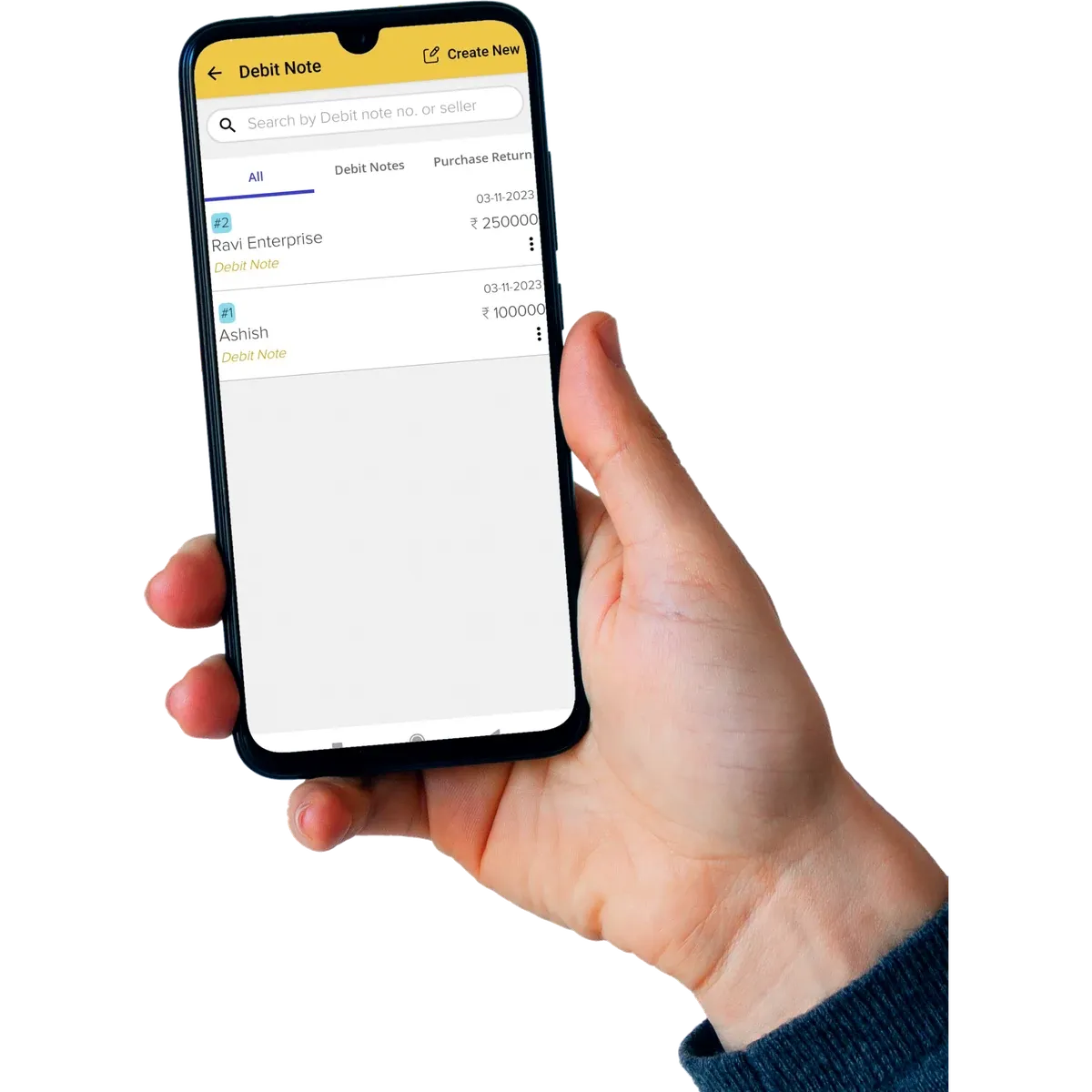
Accuracy
Record purchase returns and keep your books accurate
Debit notes correct errors on invoices and track returned goods, with a clear trail of every adjustment. Your records stay error-free, which makes bookkeeping and audits simpler.
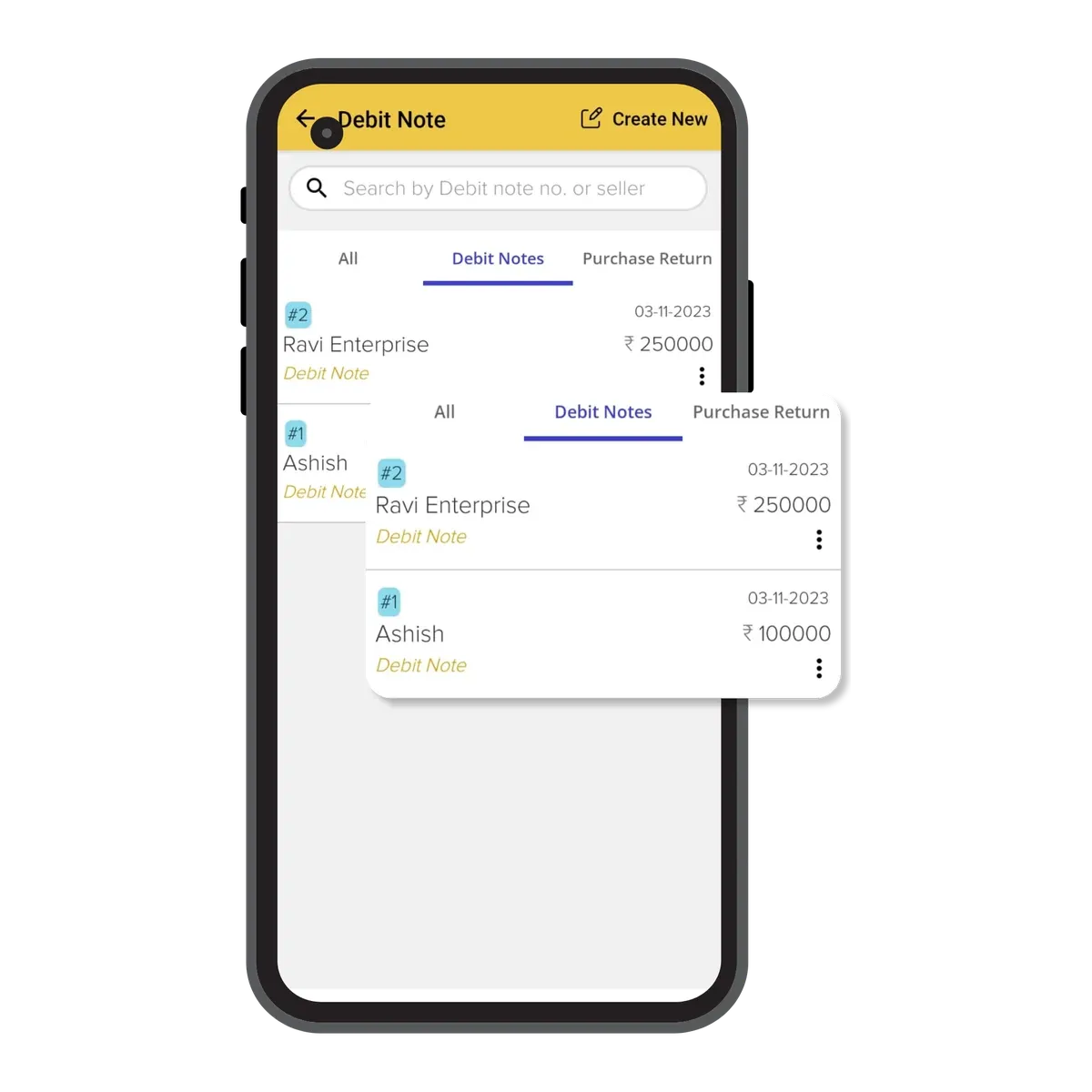
Payments
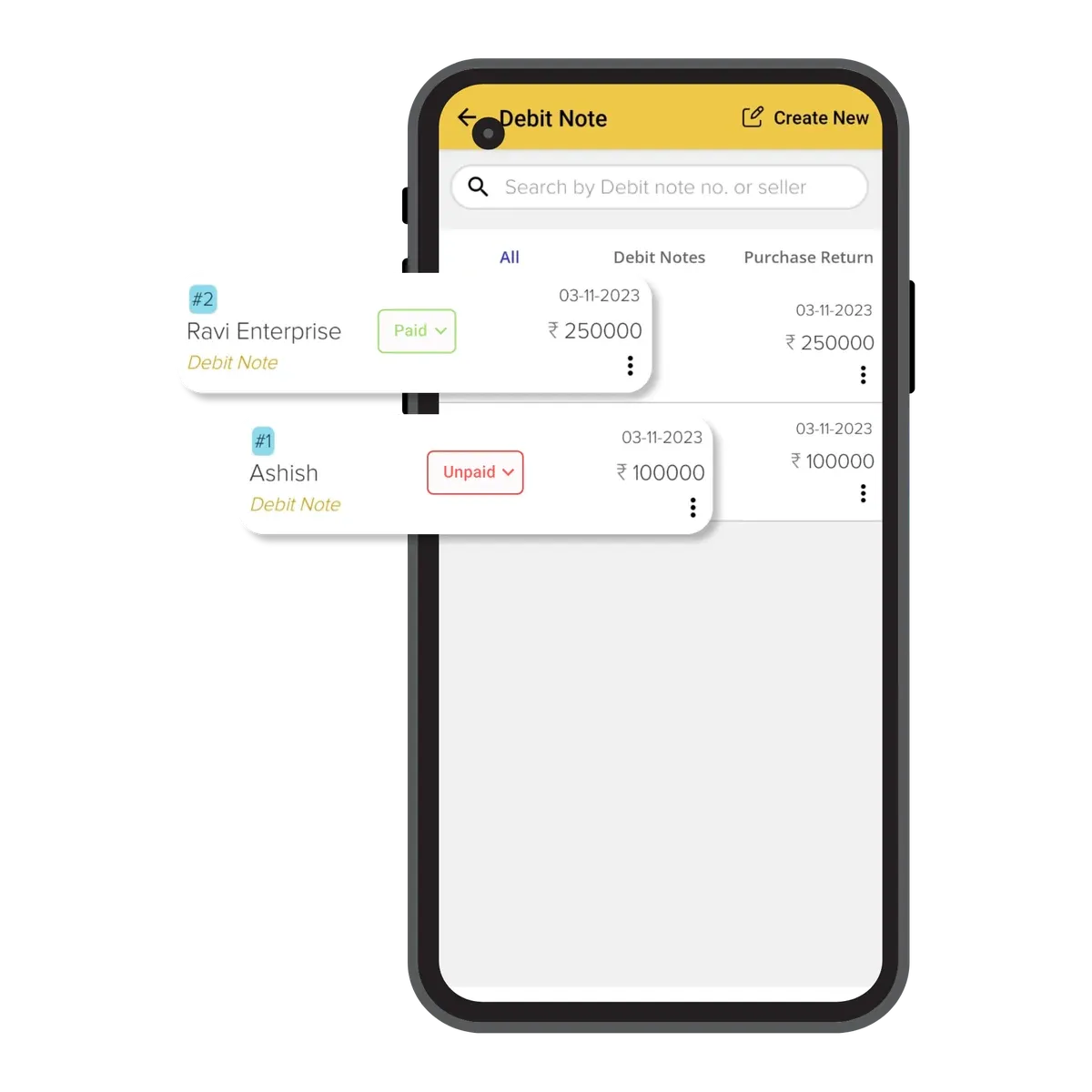
Track your pending payments
See which debit notes are paid and which are still pending, and follow up so amounts owed are settled on time. No more financial guesswork.
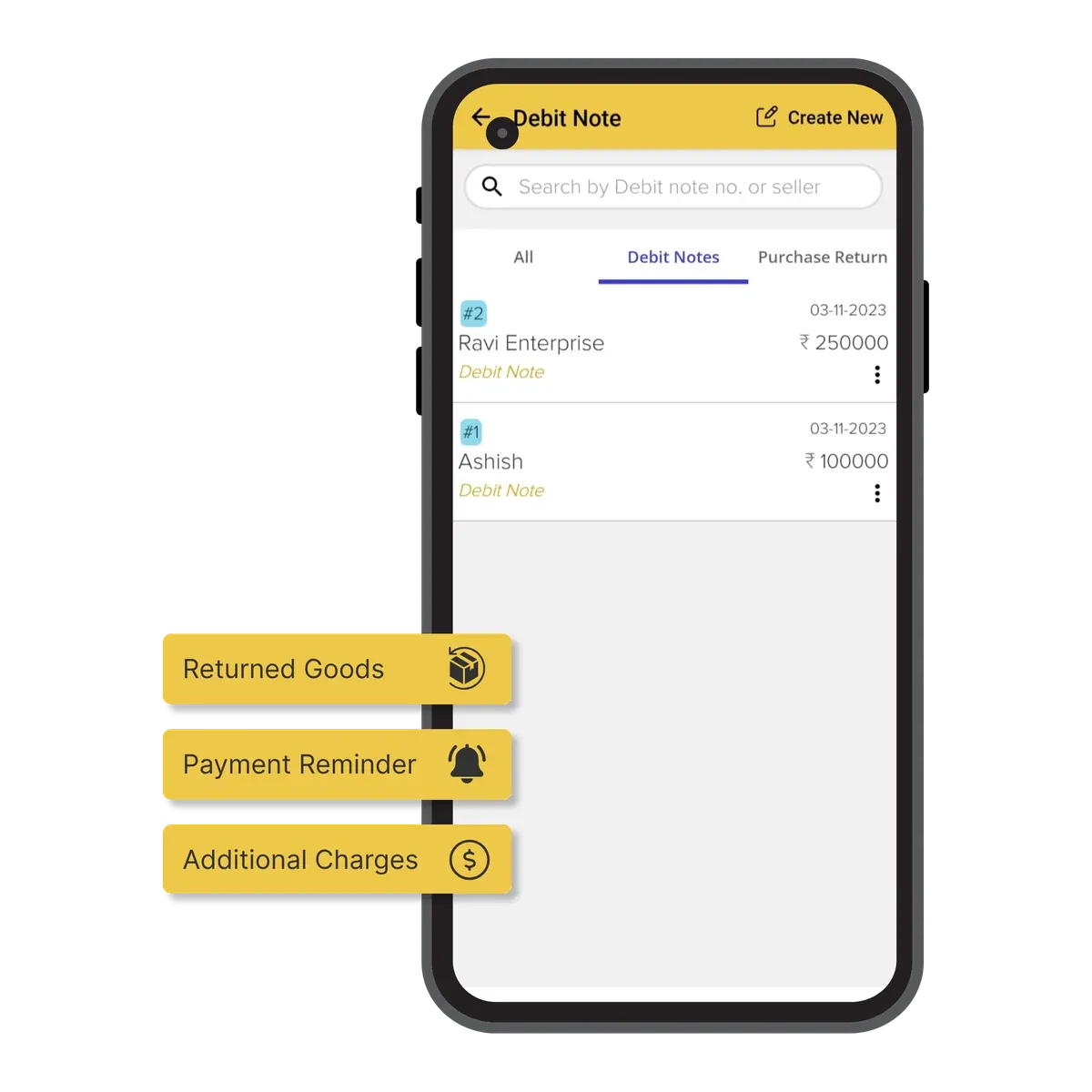
Communication
Returned goods, reminders and extra charges
Use debit notes to communicate about returned goods, additional charges and payment reminders. Add your branding so every note looks professional and is crystal clear to the other party.
Why GimBooks for debit notes
Organise debit notes your way, anywhere you go
-
Quick, GST-ready updates
Record purchase returns and corrections instantly. Your accounts stay current and GST-compliant.
-
Supplier and transport details
Mention supplier, purchase and transport details, and add, remove or edit them in seconds.
-
Edit after the preview
Fix an inaccurate debit note even after you have previewed it.
-
Find any note fast
Search by debit note number or seller name at the top of the list.
-
Download and share
Download the debit note as a PDF and share it on email, WhatsApp or any platform.
-
Secure by default
GimBooks is protected with SSL encryption, so the business details you enter stay between you and us.
How it works
How to create a debit note in GimBooks
- 01
Start a debit note
Create a new debit note, or record a purchase return, and pick the seller.
- 02
Describe goods and charges
Add the goods and charges, so the seller sees the exact details of the purchase return.
- 03
Share and find it later
Share the PDF, then find it any time by searching the debit note number or the seller name.
FAQ
Debit note questions, answered
Can't find what you need? Call us or write to our support team.
What is a debit note?
A debit note is a document that records an adjustment or correction to an invoice. It is a formal notice that changes the amount owed between the two parties, for example when a buyer returns goods to the seller.
When should I issue a debit note?
When a previous invoice has a discrepancy or needs an adjustment: you are returning goods that are damaged, defective or not as described, you are asking for a refund for a service that was not provided as agreed, or the invoice has an error.
Do I need to issue debit notes as an MSME or SME?
Yes. Debit notes help small businesses keep their accounts accurate, transparent and compliant, because they fix errors and document every change to a transaction.
What should a debit note include?
The buyer's and seller's names and contact details, the date of the debit note, a unique reference number, the number of the invoice being adjusted, a description of and reason for the adjustment, and the amount.
How do I issue a debit note?
Create a debit note with the details above and send it to the seller. The seller reviews it and adjusts their records. In GimBooks you can create it, share it as a PDF and track whether it is settled.
What are the benefits of using debit notes?
More accurate records, since errors and returns are corrected; fewer disputes, because both sides have a clear record of every adjustment; simpler communication, with one document that tracks all changes to the amount owed; and more efficient accounting.
Should I add my business details and branding to debit notes?
It is highly recommended. Your logo and branding add a professional touch and establish your brand identity.
Can I make real-time updates to debit notes in GimBooks?
Yes. Adjustments and corrections update instantly, so your financial records are always current.
Is my financial data secure in GimBooks?
Yes. GimBooks is protected with SSL encryption and has measures in place to prevent unauthorised access, so your financial information stays confidential.
How do I get started with debit notes in GimBooks?
Sign up on the GimBooks web dashboard or download the app from Google Play or the App Store. Every GimBooks Premium plan starts with a 7-day free trial.
What is the difference between a credit note and a debit note?
Both adjust the amount owed on an earlier invoice. A credit note is issued by the seller and lowers what the buyer owes, for example after a sales return, an overcharge or an error on the invoice. A debit note is usually issued by the buyer to the seller for a purchase return: goods that were damaged, defective or not as described, a service that was not delivered as agreed, or an invoice error. In GimBooks, credit notes sit with your sales returns and debit notes with your purchase returns.
Explore more GimBooks features
Every document is GST-ready and linked to the next, so nothing is typed twice.
- Invoicing GST and non-GST invoices with your logo, made in seconds and shared in a tap.
- E-invoicing Get the IRN and signed QR code for any invoice in one click.
- E-way bills Turn an invoice or challan into an e-way bill in one click.
- Inventory Stock updates itself with every sale and purchase.
- Quotations Send quotes, convert to invoices
- Proforma invoices Turn into a tax invoice in a tap
- Purchases Purchase bills, POs and vendors
- Delivery challans Original, duplicate and triplicate
- Credit notes Sales returns and corrections
- GSTR filing File GSTR-1 and 3B from the app
- Expenses Track spend by category
Record purchase returns the easy way
Debit notes, purchase returns and payments in one app. Every plan starts with a 7-day free trial.